Step 1
Choose a needle
Use a blunt tapestry needle that fits your canvas count and yarn or floss thickness. Larger canvas holes usually use thicker yarn and a larger needle. Smaller canvas holes need finer thread and a smaller needle.

Stitched grid designs
Turn a gridded color chart into a stitched pixel-style design. Plastic canvas is a flexible craft material with evenly spaced holes, so each square of the pattern can be stitched in the right color. This guide teaches the core skills: threading a needle, filling color blocks with Scotch stitches, starting and ending yarn cleanly, and finishing the outside edge.
Plastic canvas is beginner-friendly because the grid gives you a clear place for each stitch. Once you learn the basic stitch pattern, the project becomes a repeatable process of following the color chart one section at a time. When you finish your project, share it with us at 8bitcrafter on Facebook or 8bitcraftkits on Instagram.
Plastic canvas patterns use a gridded sheet, yarn or embroidery floss, and a blunt tapestry needle. The color chart works like a map, showing which color belongs in each area of the design.
For most beginner plastic canvas projects, you will stitch color blocks, secure yarn ends on the back, and finish the outside edge. Larger designs may also use a canvas bridge to connect multiple plastic canvas pieces.
The main stitch used in this guide is a Scotch stitch pattern. It fills solid color areas evenly by moving through a numbered sequence and sharing holes with neighboring stitches.
Helpful supplies include plastic canvas, yarn or embroidery floss, a blunt tapestry needle, a needle threader, scissors, the pattern chart, and optional masking tape for rough canvas edges.
Once you understand these core techniques, you can apply them to small patterns, large bridged designs, and your own plastic canvas projects.
Setup
Start by threading a blunt tapestry needle so the yarn is ready for stitching. A blunt needle is easier to use with plastic canvas because it passes through the holes without splitting the canvas.
Step 1
Use a blunt tapestry needle that fits your canvas count and yarn or floss thickness. Larger canvas holes usually use thicker yarn and a larger needle. Smaller canvas holes need finer thread and a smaller needle.
Step 2
Push the wire end of the needle threader through the eye of the needle.
Step 3
Insert the yarn or floss through the wire loop of the needle threader.
Step 4
Pull the plastic end of the needle threader back through the needle eye to bring the yarn or floss with it.
Step 5
Pull about 2 inches of yarn or floss through the needle so you have something to hold while stitching.
Technique
Start with the basics first. For most patterns, you will thread the needle, fill color areas with Scotch stitches, start and end yarn on the back of the canvas, and finish the outside edge with overcast stitch. The canvas bridge technique is optional. Use it only when a pattern is larger than one sheet of plastic canvas or when the pattern specifically includes bridge pieces.
Step 1
Learn a reliable fill stitch pattern and how adjoining stitches share holes without leaving gaps.
Step 2
Start yarn on the back of the canvas, leave a short tail, and cover that tail with new stitches to lock it in.
Step 3
Use this optional technique when a larger design needs multiple canvas pieces connected together.
Step 4
Follow the bridge sequence step by step to lock part A, the bridge, and part B together.
Step 5
Anchor yarn under previous stitches, add slight tension, and trim it so the end stays hidden.
Step 6
Wrap the outside edge of the canvas to hide exposed plastic and give the finished piece a clean border.
Step 1
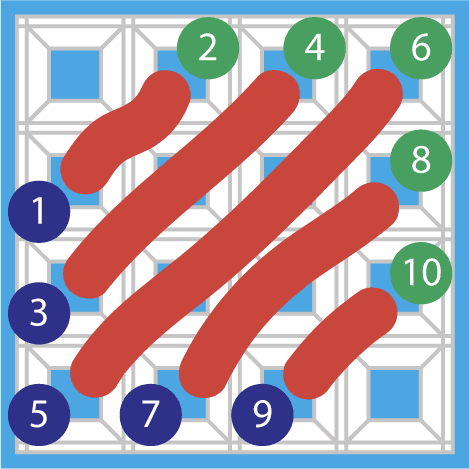
This Scotch stitch pattern fills solid color areas and gives plastic canvas work a uniform look. Refer to the diagram and follow the numbered sequence.
The purple numbers show where the needle comes up from the back of the canvas. The green numbers show where the needle goes down from the front.
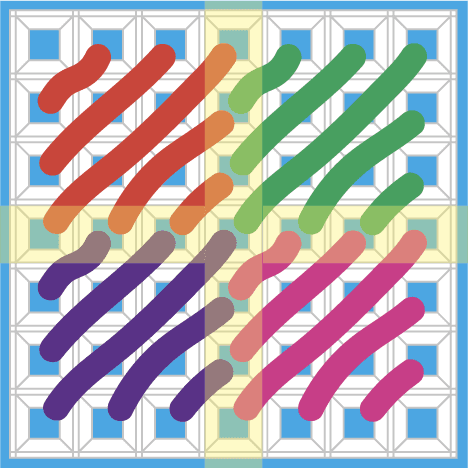
When you place two Scotch stitches next to each other, the adjoining sides share holes. Use the highlighted area in the reference image as a guide so neighboring stitches touch cleanly without leaving gaps.
Step 2
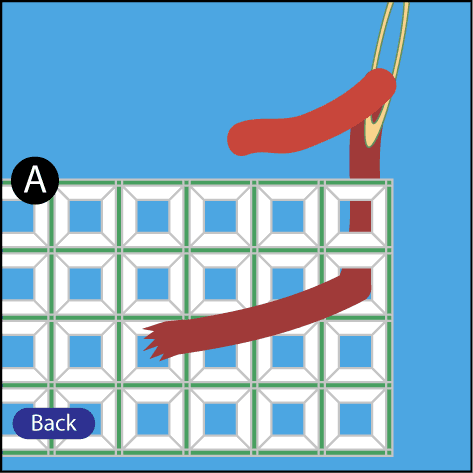
Start new yarn on the back of the canvas so the front stays clean.
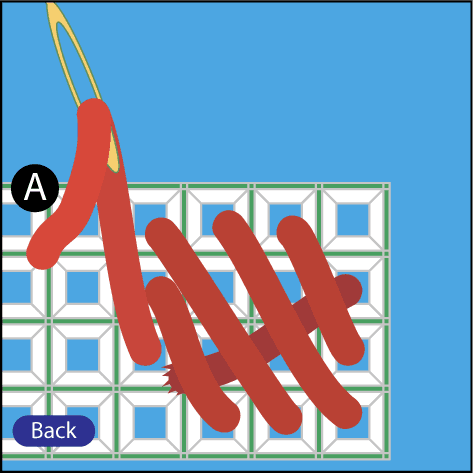
Using the Scotch stitch diagram, bring the needle up from the back at position 1. Figures 5 and 6 show the back of the canvas, while the Scotch stitch diagram shows the front.
Pull the yarn through and leave about a 1-inch tail on the back. Continue stitching over that tail so the new stitches lock it in place. Trim any excess yarn after the tail is secure.
If you are starting next to existing stitches, you can also slide the needle under a few stitches on the back to anchor the yarn before continuing.
Step 3
The bridge system is an optional method for connecting multiple plastic canvas pieces. It is useful when a pattern is larger than the canvas sheets you have or when a large design is split into sections.
Not every plastic canvas pattern needs a bridge. If your pattern fits on one sheet, you can skip this section.
When using the bridge system, pay close attention to the bridge overlap area. Do not stitch in the overlap until you are ready to connect the pieces.
Also make sure every canvas piece is facing the correct direction before stitching. It is easy to flip a section accidentally, which can keep the pieces from lining up correctly.
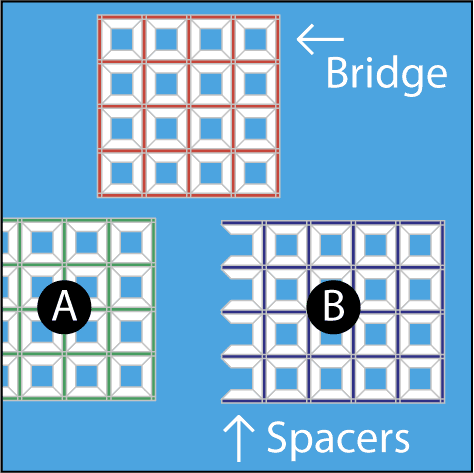
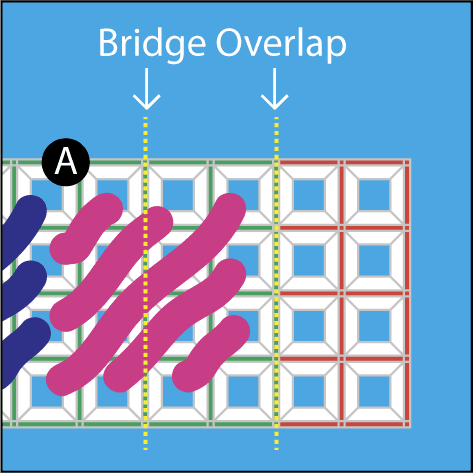
Step 4
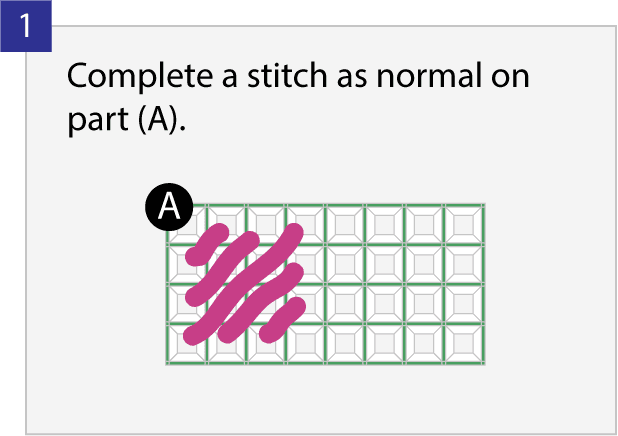
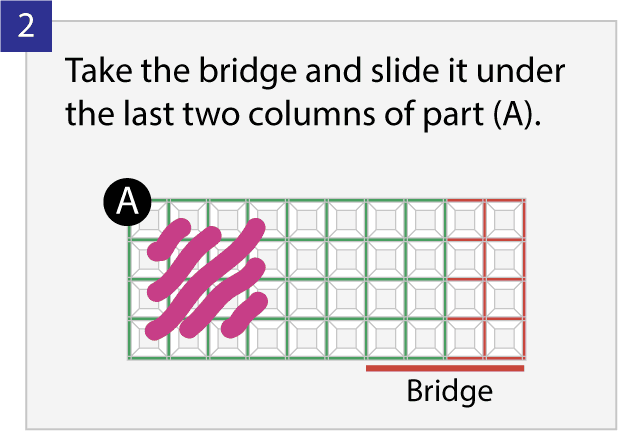
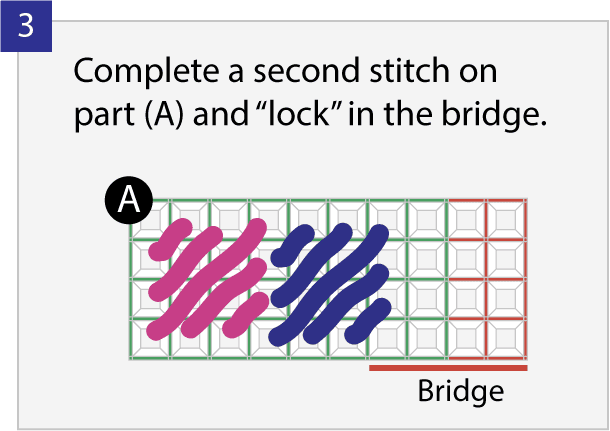
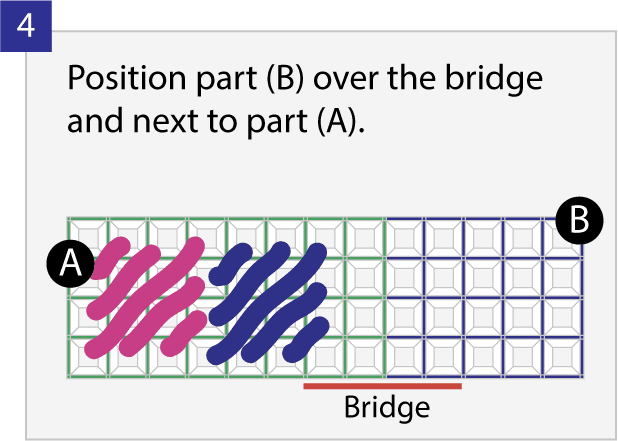
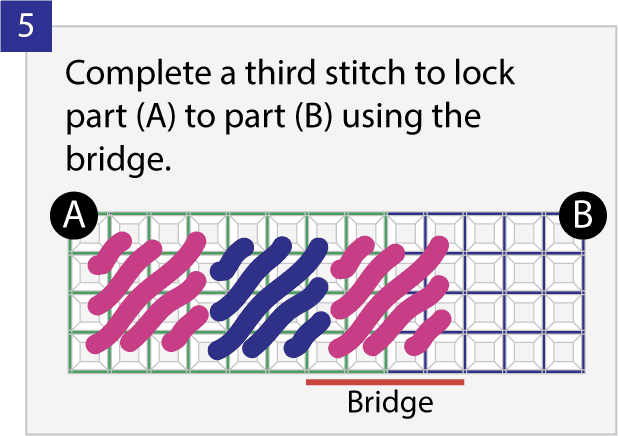
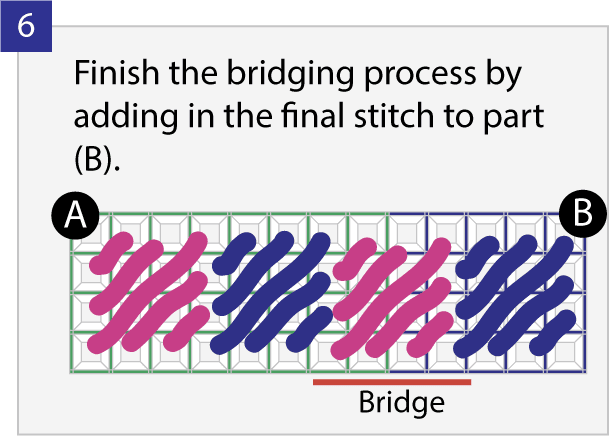
Step 5
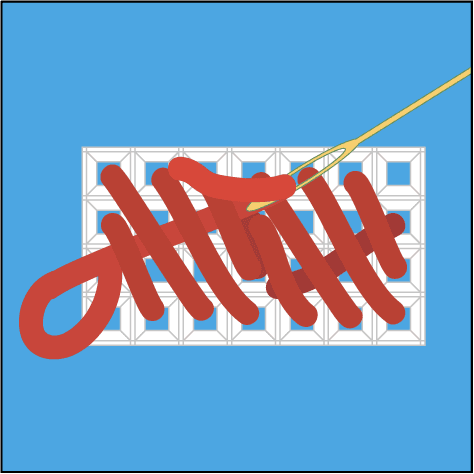
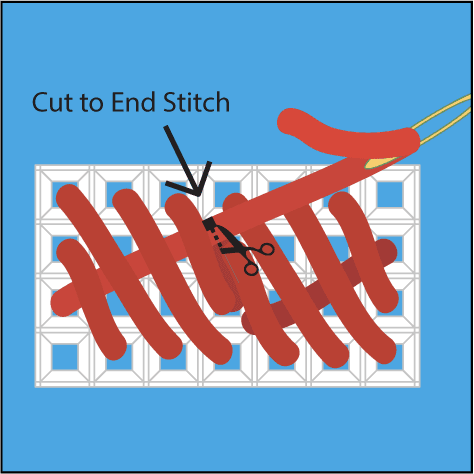
When you are running out of yarn or changing colors, finish the current stitch and anchor the yarn on the back of the canvas.
Guide the needle under several previous stitches on the back of the canvas. Pull the yarn through with slight tension, then trim the end close to the stitches.
The slight tension helps the cut end tuck under the previous stitches for a cleaner back and a neater front.
Step 6
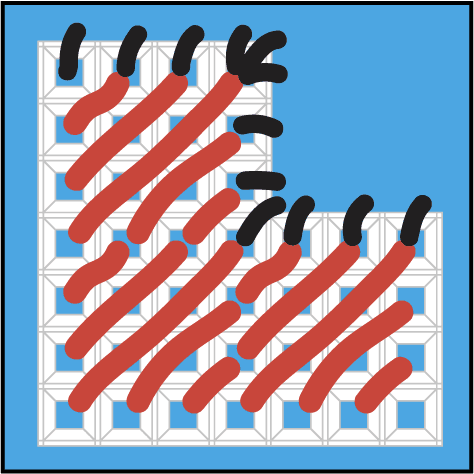
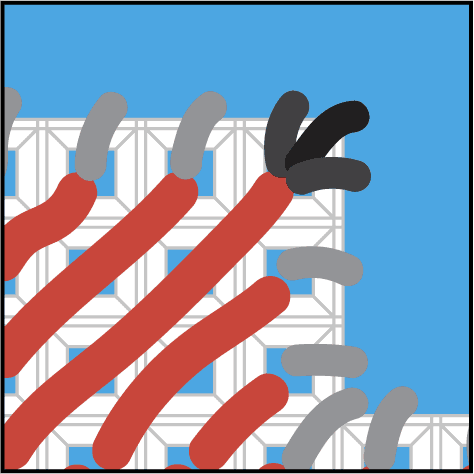
Overcast stitch wraps the outside edge of the canvas to hide exposed plastic and give the finished piece a clean border.
Use one wrap in each hole along straight edges. On outside corners, use two or three wraps as needed to cover the plastic completely.
Start and end overcast stitches the same way you start and end Scotch stitches: anchor the yarn on the back, stitch the edge, then tuck the end under previous stitches.
To finish a plastic canvas piece, work the overcast stitch around the exposed outside border after the main design is complete.
Tip
Plastic canvas count tells you how many holes are in one inch. A lower count has larger holes, while a higher count has smaller holes.
7-count plastic canvas is the most common beginner choice for yarn-based plastic canvas projects. It usually works well with worsted-weight yarn or plastic canvas yarn and a larger blunt tapestry needle.
10-count and 14-count plastic canvas create smaller versions of a design, but they usually need finer materials. Use lighter yarn, pearl cotton, or embroidery floss with a smaller tapestry needle.
If you want to scale a pattern down, try 10-count or 14-count plastic canvas with a basic cross stitch technique. These smaller versions are great for ornaments, small collectibles, color experiments, and projects that use a wide range of embroidery floss colors.
Beginner Help
Most beginner plastic canvas issues come from starting with advanced steps too soon, pulling yarn too tightly, or using materials that do not match the canvas count.
Start with the basic stitch, follow the color chart one section at a time, and use the bridge technique only when a larger pattern requires it.
Materials
Start with 7-count plastic canvas, yarn or plastic canvas yarn, a blunt tapestry needle, a needle threader, scissors, and your pattern chart. Use embroidery floss, pearl cotton, or lighter yarn for smaller 10-count and 14-count canvas projects.